Center of Excellence for Teaching and Learning
Vision of the TLC
Establish a center that actively engages teachers and learners to inculcate higher-order thinking skills, promote innovation, and develop a workforce in emerging technologies through a holistic, student-centered, and multidisciplinary approach, ultimately enhancing the quality of education while fostering a culture of continuous improvement.
Mission of the TLC
- Develop infrastructure to support pedagogy initiatives, accessibility, and inclusion while fostering a culture of innovation.
- Empower faculty with modern teaching pedagogies, learner-centric approaches, and advanced technologies to enhance teaching and assessment practices.
- Encourage and support faculty in research on teaching-learning methodologies while promoting an innovation-driven academic environment.
- Continuously monitor, evaluate, and improve teaching and learning processes to ensure sustained excellence in education.
Activities in TLC
- Workshop on “Teaching-Learning Process” – June 2026
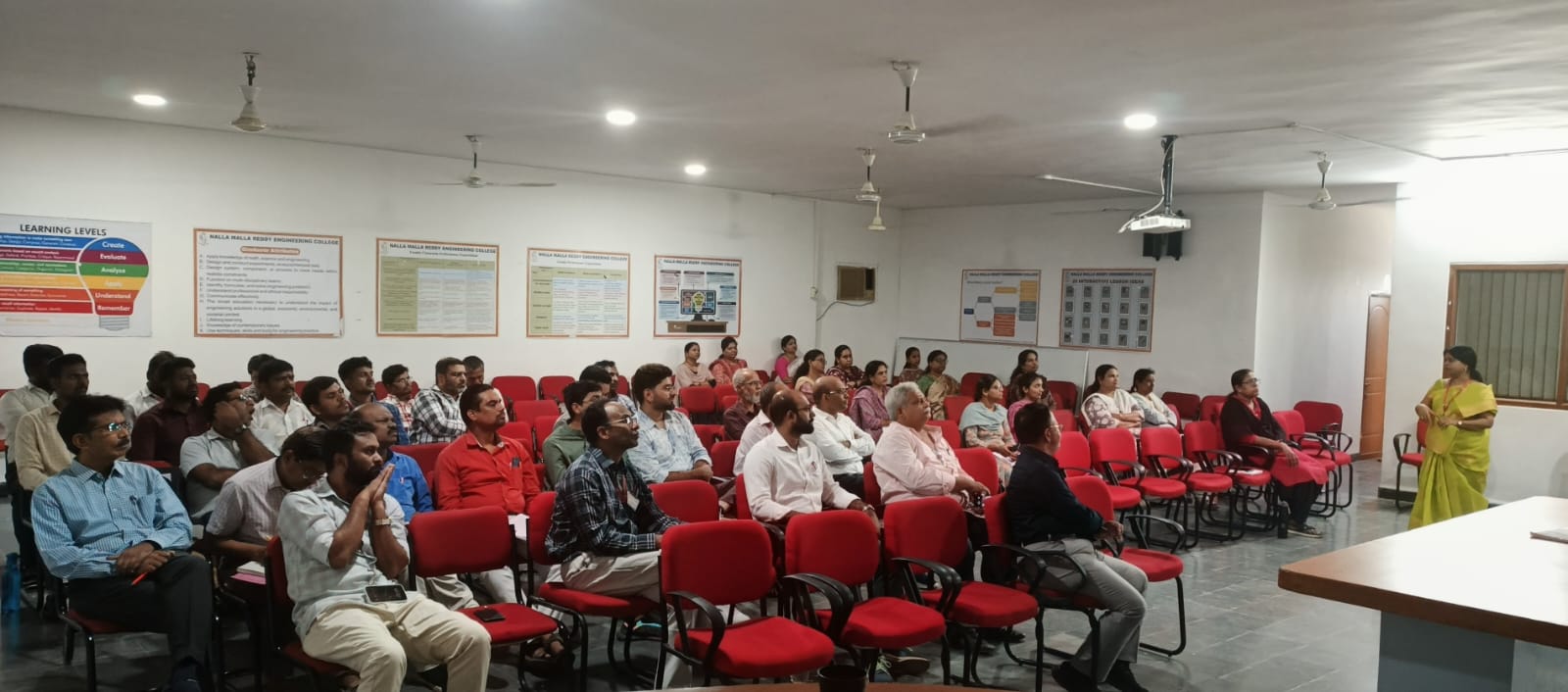
Nalla Malla Reddy Engineering College (NMREC), through its Teaching and Learning Centre (TLC), established under the ERASMUS+ AIDEdu Project, organised a faculty development workshop on the “Teaching-Learning Process” in June 2026.The workshop aimed to strengthen faculty members’ understanding of the various dimensions of the teaching-learning process and equip them with effective pedagogical strategies to create engaging, inclusive, and student-centred learning environments. It highlighted the importance of moving beyond conventional lecture-based instruction towards interactive, participatory, and outcome-oriented teaching practices.The sessions focused on essential aspects of effective teaching, including lesson planning, setting clear learning objectives, identifying students’ learning needs, classroom management, active learning strategies, and continuous assessment. Faculty members were introduced to innovative pedagogical approaches such as experiential learning, activity-based learning, collaborative learning, peer learning, flipped classrooms, and project-based learning.The workshop also emphasised the importance of student engagement through meaningful classroom interactions, problem-solving activities, group discussions, reflective learning, and the effective integration of digital tools into instructional practices. Discussions highlighted the role of faculty members as facilitators of learning who encourage students to participate actively, think critically, and take responsibility for their academic development.The programme improved faculty understanding of the teaching-learning process and strengthened their ability to adopt effective instructional methods that enhance student participation and engagement. It further contributed to NMREC’s commitment to continuous faculty development, pedagogical innovation, and quality enhancement in higher education, supporting the broader objectives of the ERASMUS+ AIDEdu Project.
- Workshop on “Mentoring” – September 2025
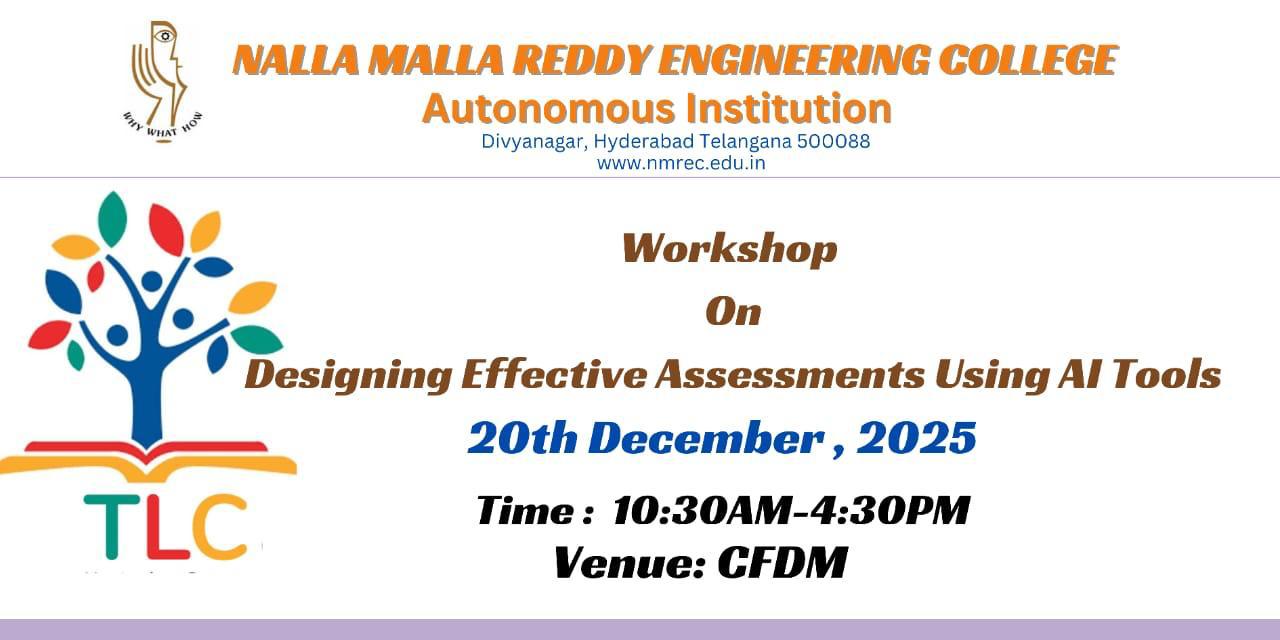
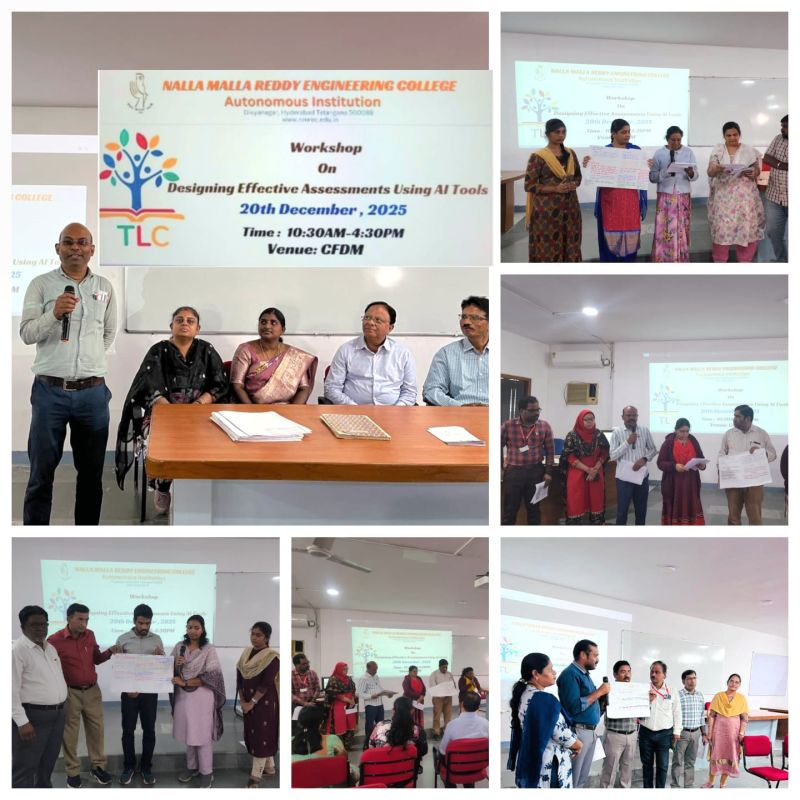
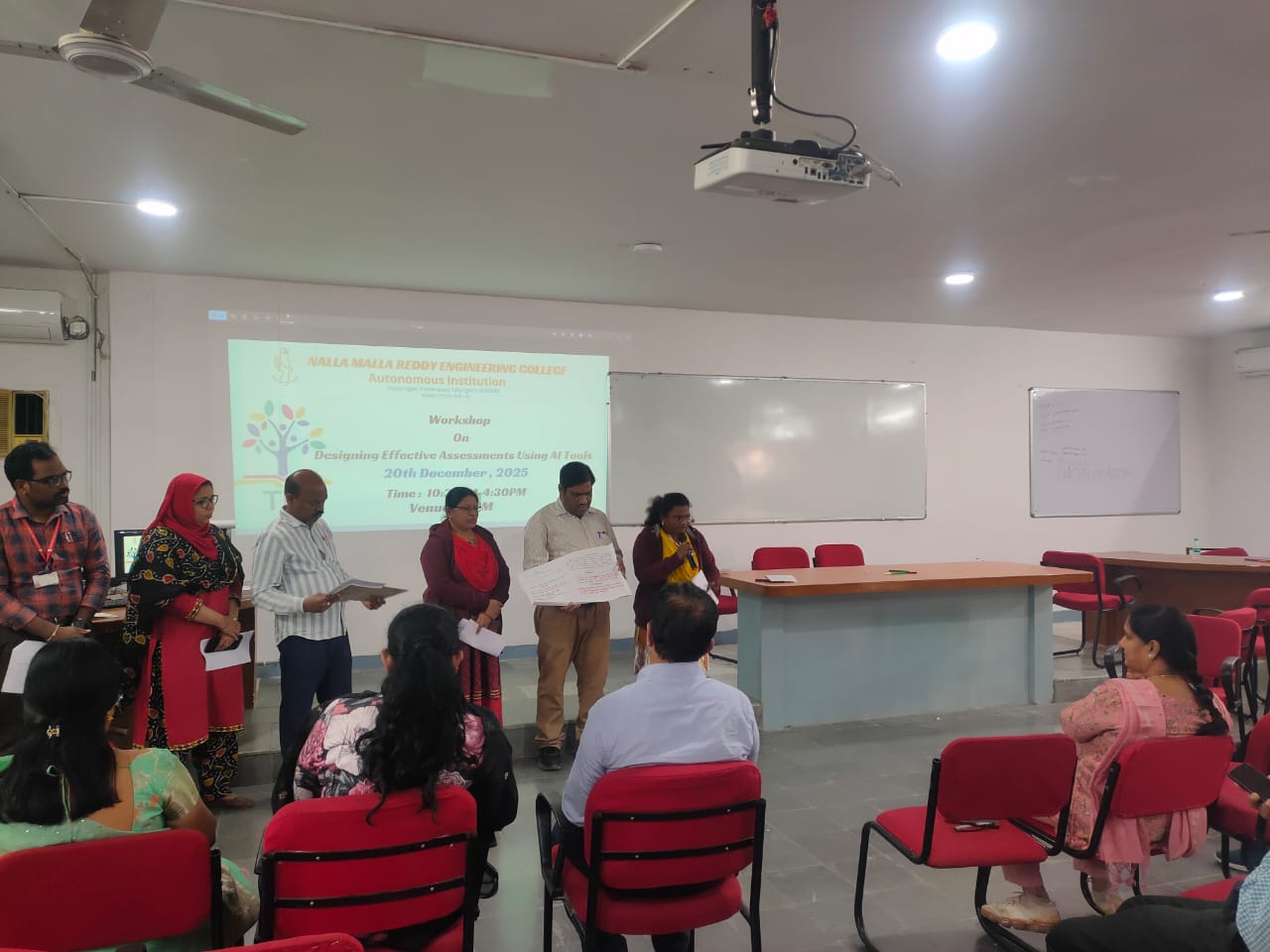
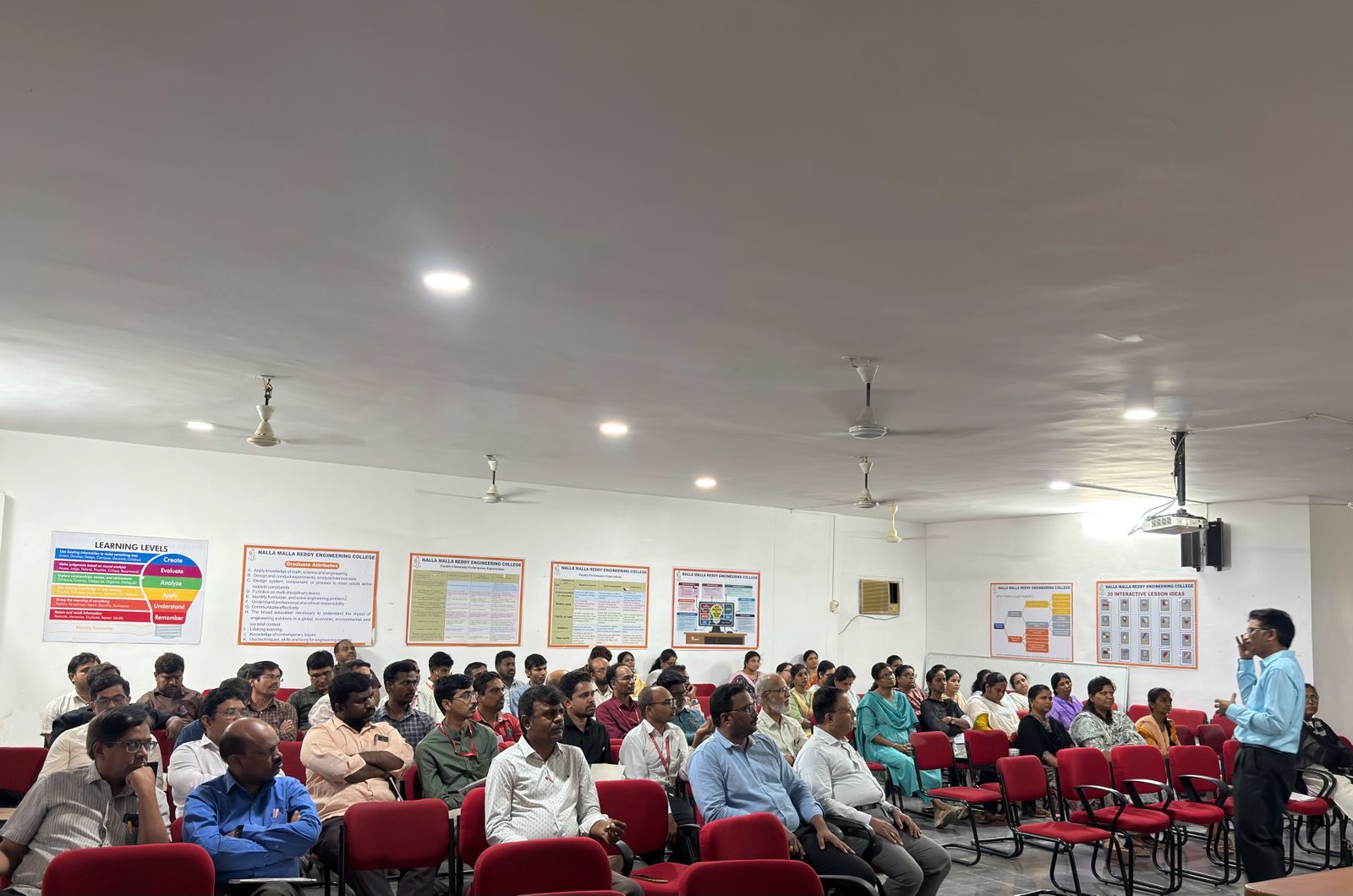
- Workshop on “Designing Effective Assessments using AI Tools” – 20th December 2025
Nalla Malla Reddy Engineering College (NMREC), through its COE in Teaching and Learning, established under the ERASMUS+ AIDEdu Project, organised a faculty development workshop titled “Designing Effective Assessments Using AI” in December 2025.The workshop aimed to enhance faculty members’ digital competencies and strengthen their ability to integrate Artificial Intelligence (AI) into assessment design and evaluation practices. It focused on demonstrating how AI-powered tools can support educators in developing effective, learner-centred, and outcome-based assessment strategies.The sessions introduced faculty members to the practical applications of AI in generating question banks, designing assessment rubrics, developing questions aligned with Bloom’s Taxonomy, preparing formative and summative assessments, and creating diverse assessment formats. Participants explored how AI tools could assist in framing higher-order thinking questions, evaluating student learning outcomes, and providing constructive feedback.Through hands-on activities and practical demonstrations, faculty members gained exposure to AI-powered educational tools and explored their potential to make assessment processes more efficient, innovative, and aligned with Course Outcomes (COs) and Programme Outcomes (POs).The workshop strengthened faculty readiness for technology-enabled assessment and contributed to the AIDEdu project’s broader objective of integrating Artificial Intelligence into higher education. It also promoted a culture of digital transformation at NMREC by empowering educators to adopt innovative assessment practices, enhance the quality of evaluation, and create more meaningful learning experiences for students.
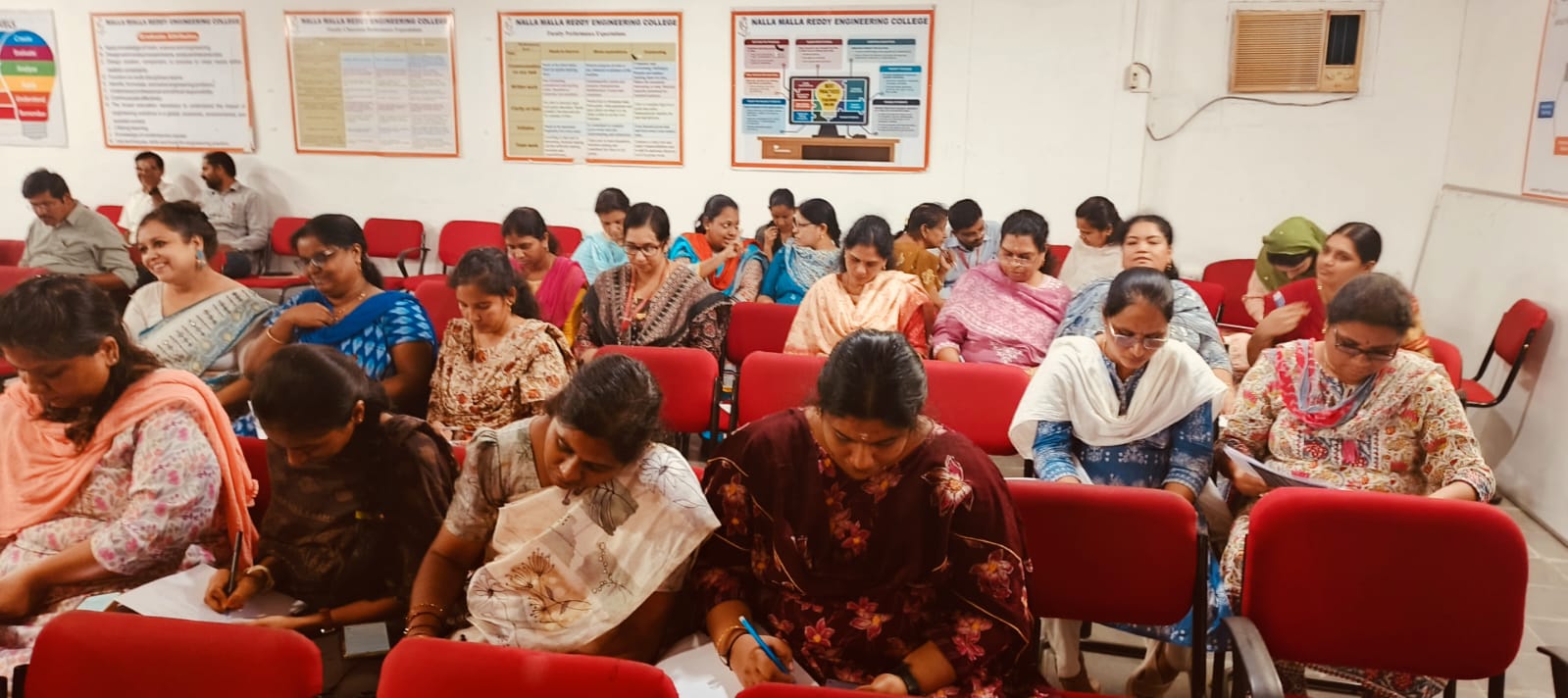
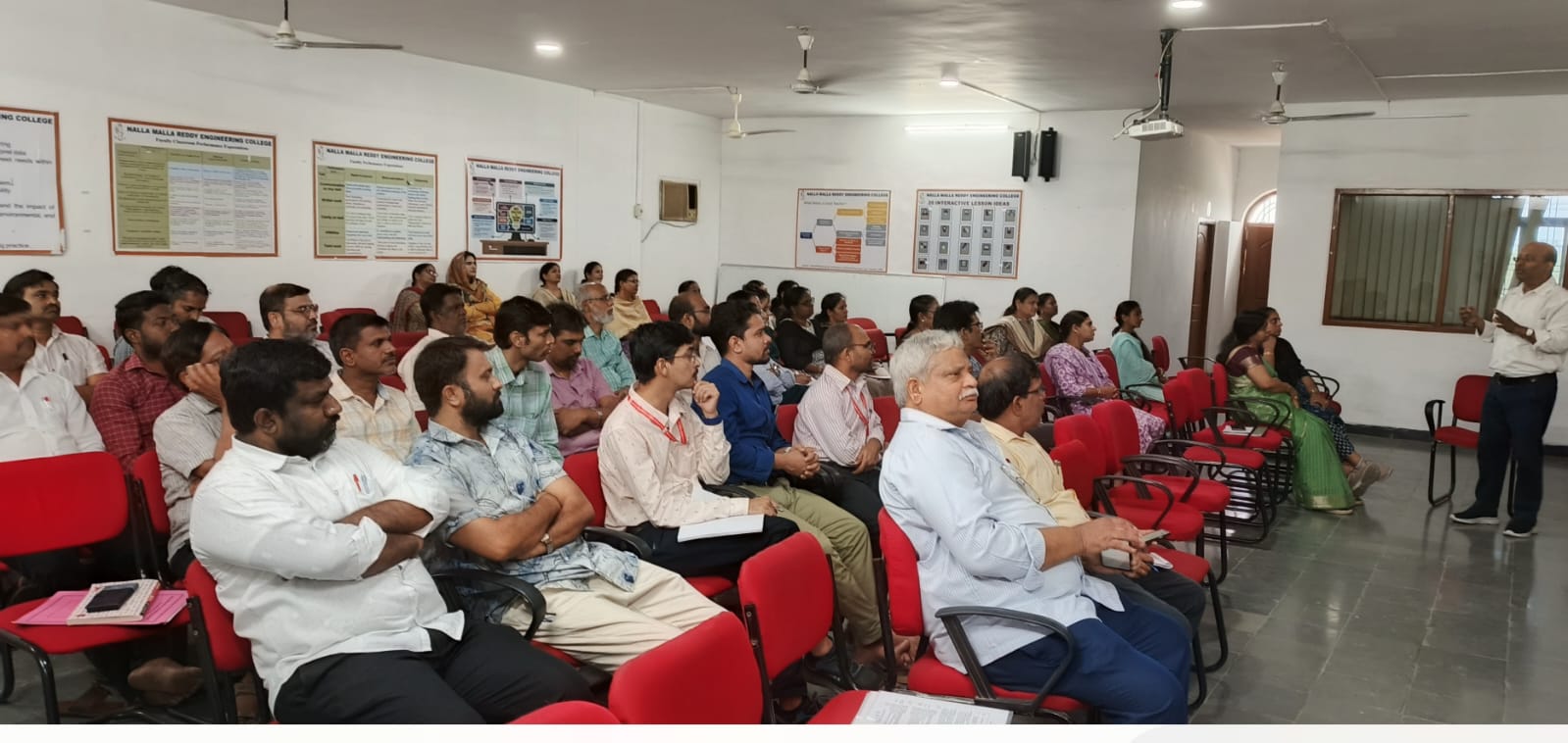
- Faculty Development Program on “Students Project in Theory and Laboratory Courses” – February 2026
- Webinar on “Design Thinking for Students: A Pathway to Innovation” – March 2026
Nalla Malla Reddy Engineering College (NMREC), through its Center of Excellence for Teaching and Learning, established under the ERASMUS+ AIDEdu Project, organised a student-focused webinar titled “Design Thinking for Students: A Pathway to Innovation” in March 2026.The webinar aimed to develop students’ innovation capabilities by introducing them to the principles and practical applications of Design Thinking as a structured approach to identifying problems, exploring creative solutions, and developing innovative ideas. It highlighted the importance of understanding user needs, approaching challenges from multiple perspectives, and transforming ideas into practical solutions.The sessions familiarised students with the key stages of the Design Thinking process, including Empathise, Define, Ideate, Prototype, and Test. Through discussions, real-world examples, and interactive learning activities, participants explored how these stages could be applied to solve everyday problems, address societal challenges, and develop technology-driven solutions.The webinar also encouraged students to embrace creativity, critical thinking, collaboration, experimentation, and a problem-solving mindset. Particular emphasis was placed on the importance of interdisciplinary thinking and user-centred innovation in developing solutions that are both meaningful and sustainable.The programme strengthened students’ innovation capabilities by equipping them with practical approaches to creative problem-solving and idea development. It contributed to NMREC’s broader vision of nurturing an innovation-driven learning environment, encouraging students to move beyond theoretical knowledge and become proactive problem-solvers, creative thinkers, and future innovators.
- TLC Meeting for Annual Review and Future Plan
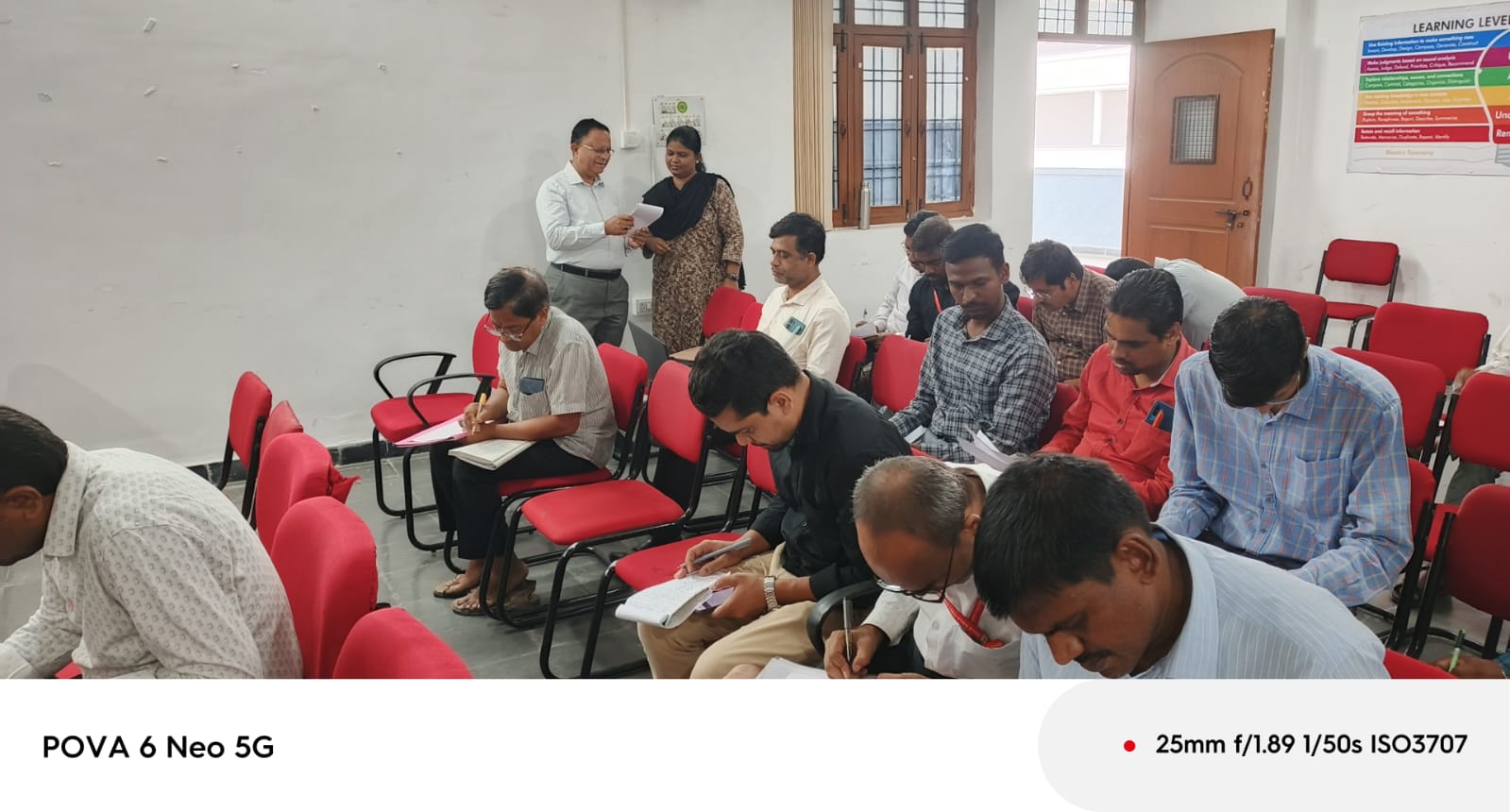
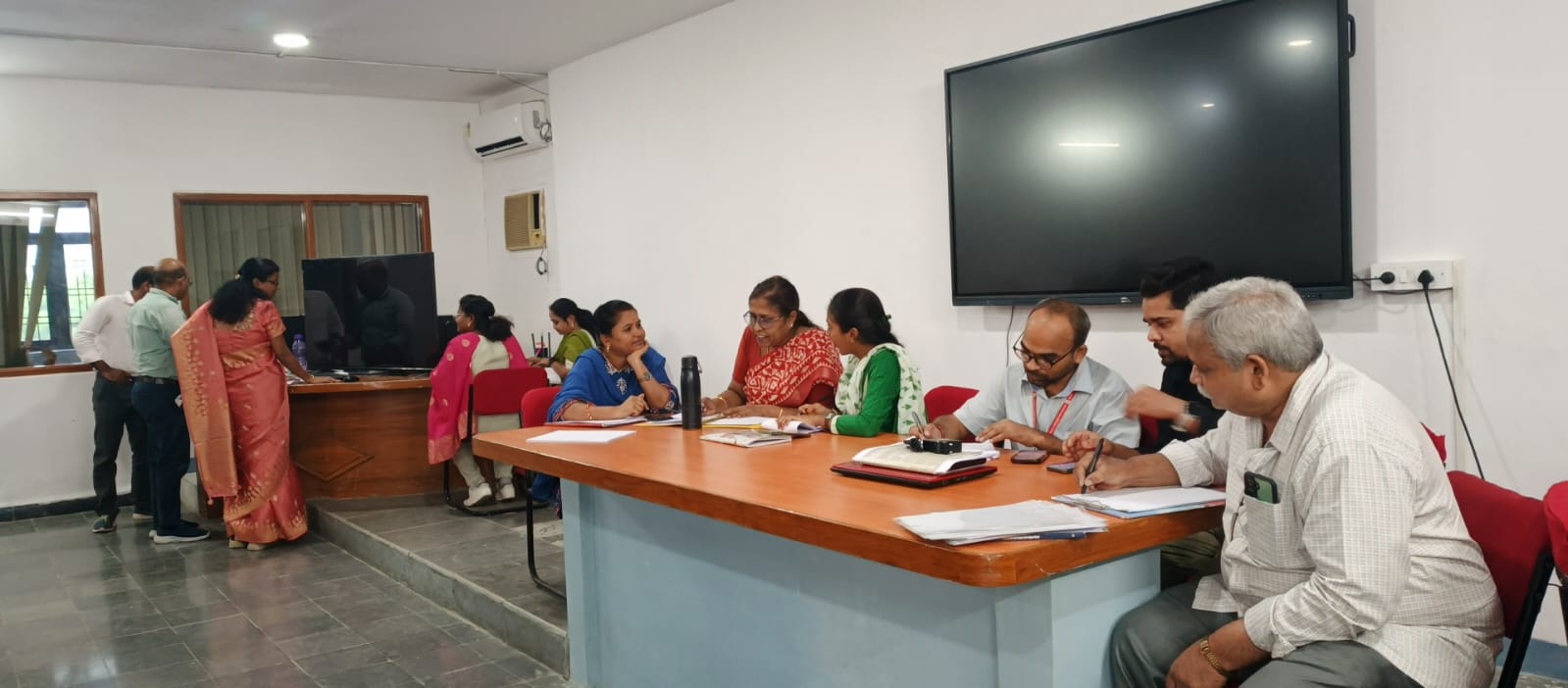
- Workshop for Faculty on Teaching-Learning Process – June 2026
- Strengthening Digital Education Through AI – 21st July 2026
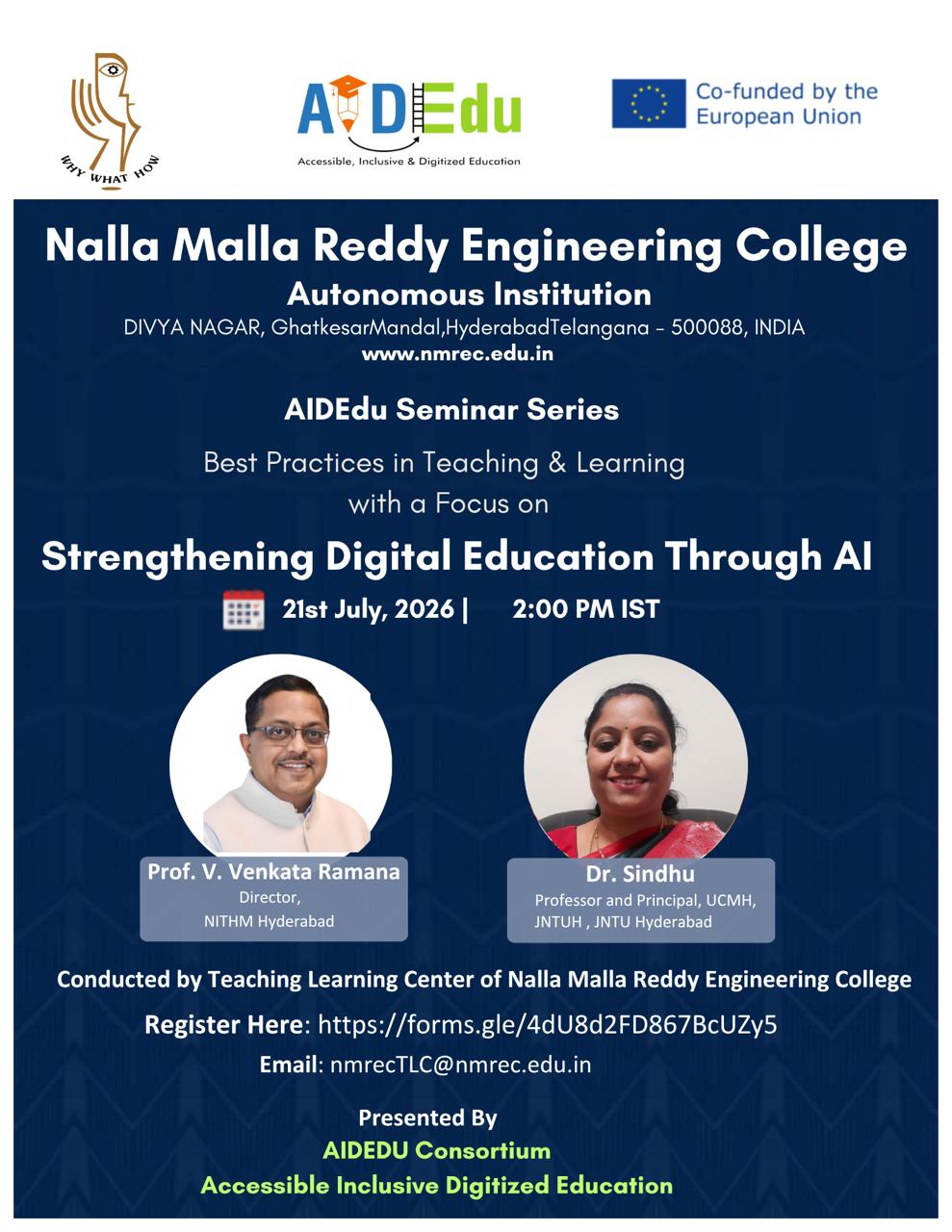
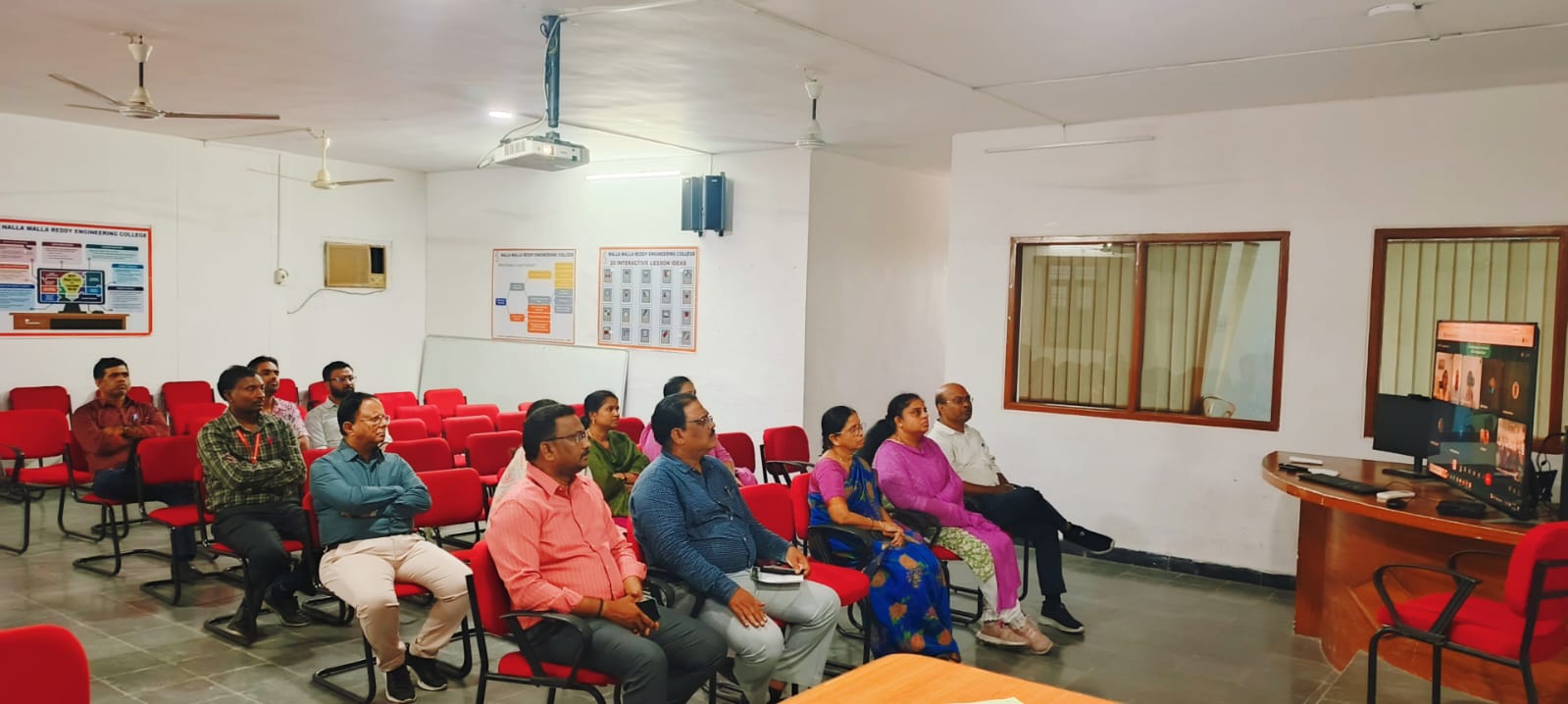
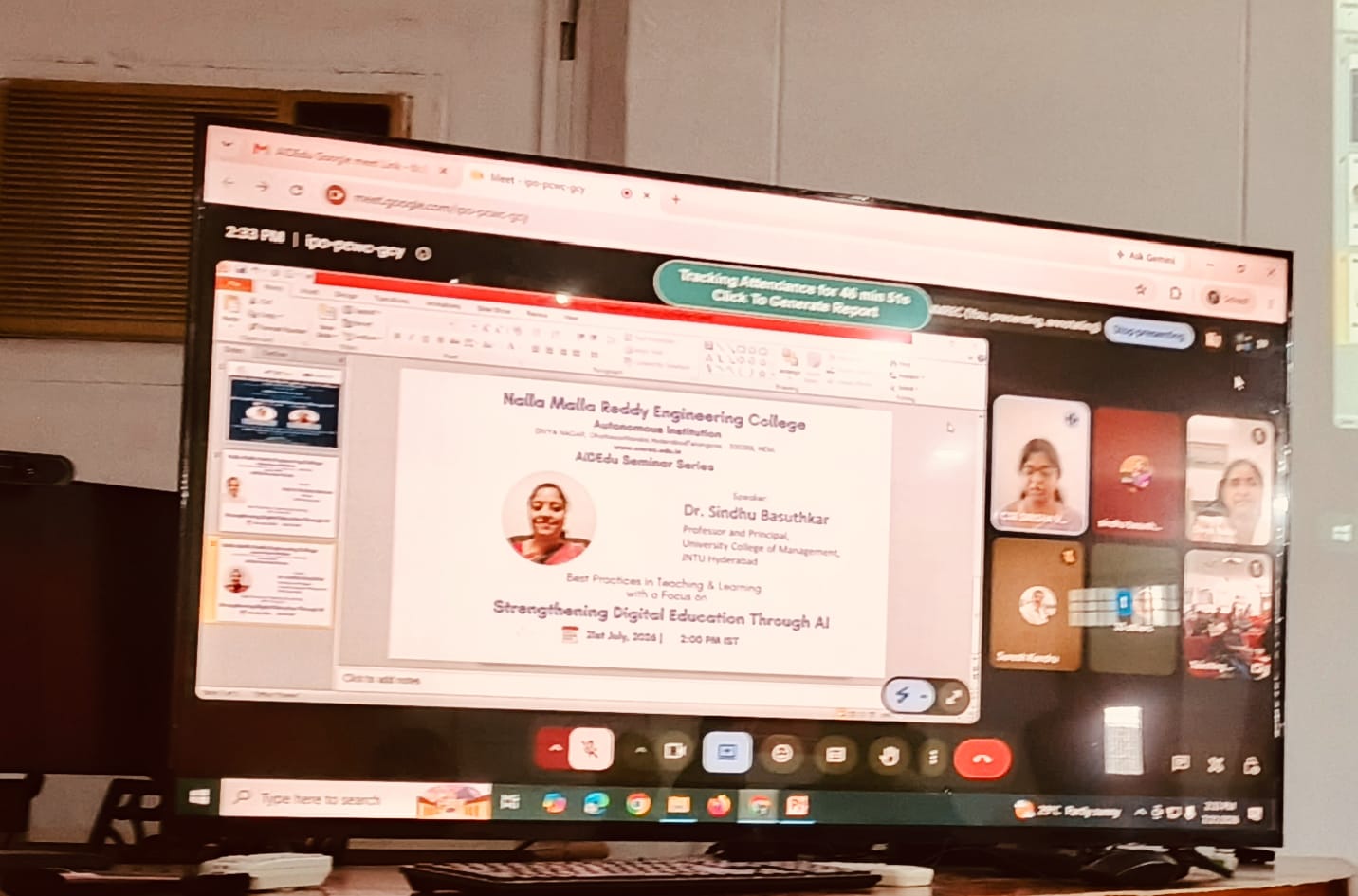
Nalla Malla Reddy Engineering College (NMREC), Hyderabad, organised an insightful webinar under the AIDEdu Seminar Series on 21 July 2026 at 2:00 PM (IST), focusing on “Best Practices in Teaching and Learning with a Focus on Strengthening Digital Education Through AI.”The seminar was organised as part of the ERASMUS+ EDU-2023-CBHE-STRAND-2 Project (101127505 – AIDEdu), co-funded by the European Union. The initiative aimed to promote innovative teaching practices, strengthen digital education, and explore the transformative role of Artificial Intelligence (AI) in higher education.
The programme featured two distinguished academic speakers:
- Prof. V. Venkata Ramana, Director, National Institute of Tourism and Hospitality Management (NITHM), Hyderabad.
- Prof. (Dr.) Sindhu B., Principal, University College of Management, Jawaharlal Nehru Technological University (JNTU), Hyderabad.
The speakers shared their expertise and perspectives on emerging trends in digital education, effective teaching-learning methodologies, and the integration of AI into academic practices. The discussions highlighted how AI-powered technologies can support personalised learning, improve teaching effectiveness, facilitate academic planning, and create more interactive and engaging educational environments.Particular emphasis was placed on adopting technology-enabled pedagogical practices, enhancing faculty digital competencies, and ensuring that AI serves as an effective support system for educators and learners. The seminar also provided an opportunity for academic stakeholders to exchange experiences, discuss challenges, and explore practical strategies for strengthening digital transformation in higher education.The AIDEdu Seminar Series contributed to NMREC’s efforts to build a digitally empowered academic ecosystem by encouraging faculty members and educational leaders to embrace AI-supported teaching and learning practices. It strengthened awareness of emerging educational technologies and promoted the exchange of best practices, supporting the broader AIDEdu project objective of enhancing institutional capacity for innovative, inclusive, and technology-driven higher education.
- Training on Mentor – Mentee process – October 2026
- Develop an Institutional Teaching Effectiveness Framework